LMP #521 | Plumbing Emergency?


LMP #521 | Plumbing Emergency?

If you live in Metairie, Kenner, or anywhere in Jefferson Parish, you may have opened your latest water bill and done a double-take. Across the parish, homeowners are watching their water bills jump — sometimes dramatically — right after the Parish installs a new water meter — a “smart” meter. You are not imagining it, and you are definitely not alone.
Here at Earl’s Plumbing & Heating, our phones have been busy with the same question: “My meter got changed and now my bill is huge — what’s going on?” Let’s break down exactly what’s happening, why it’s happening, and — most importantly — how to tell whether your higher bill is simply accurate… or a warning sign of a hidden leak that’s quietly costing you money every single day.
Jefferson Parish is in the middle of a massive, multi-year project to replace roughly 144,000 water meters across the parish — an infrastructure upgrade estimated at around $88 million. Many of the meters coming out of the ground were installed decades ago, some dating all the way back to the 1950s and ’60s.
Here’s the key detail: old mechanical water meters slow down as they age. After 50 or 60 years, the internal parts wear out and the meter under-counts how much water is actually flowing through it. In other words, for years many households were quietly being under-billed because their worn-out meter simply couldn’t keep up.
The new smart meters don’t have that problem. As one Jefferson Parish councilman put it, the new meters are “deadly accurate.” So when your bill goes up after a changeout, the first — and most common — reason is simply this: you’re finally being billed for the water you’re really using.
Here’s where it gets important. That same worn-out old meter that was under-counting your normal usage was also masking something else: slow, steady leaks. A toilet that runs a little, a pinhole leak under your slab, a dripping supply line, or an irrigation valve that never fully closes — an old, sluggish meter might barely register them. A brand-new accurate meter catches every drop.
So for a lot of homeowners, the new meter isn’t creating a problem — it’s revealing one that was already there, silently running up the bill 24 hours a day.
Common hidden leaks we find every week include:
Before you assume the worst, do a quick check. Here’s a simple at-home meter test:
Jefferson Parish also offers a free usage-tracking tool called DropCountr, which can alert you to continuous water use that often signals a leak. It’s a great early-warning system — but it tells you that you have a leak, not where it is. That’s where we come in.
We want to be straight with you: Earl’s Plumbing is not the water company, and we can’t change your meter or adjust your Parish bill. What we can do is find and fix the leaks that are driving that bill up — so you stop paying for water that’s running straight into the ground.
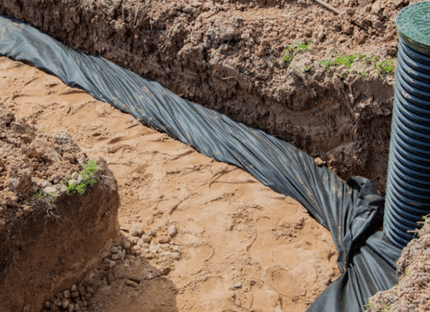
Using electronic water leak detection, we pinpoint the exact location of a leak without tearing up your whole yard or floor. For lines running under your slab or underground, our video pipe inspection and hydro-tunneling specialists can locate and repair the problem with minimal disruption. Once the leak is fixed, your usage — and your bill — drops back to normal.
Here’s something many homeowners don’t know: once you repair a leak, Jefferson Parish may issue a one-time billing adjustment to help offset the spike, as long as you can show proof the leak was found and fixed. That means a professional leak repair from Earl’s could pay for itself twice — lower bills going forward, and a possible credit for the damage already done. (Always confirm current details and requirements directly with Jefferson Parish Utility Services.)
If your water bill spiked after your new meter went in, don’t assume you’re stuck with it. It might be accurate… or it might be a leak quietly costing you money every day. The only way to know for sure is to check.
For more warning signs to watch for, read our guide on the signs and symptoms of possible water leaks — and when you’re ready, give Earl’s Plumbing & Heating a call at 504-888-8888 or schedule your leak detection today. The flow must go on — but your money shouldn’t be flowing down the drain.